Spades Rules: How to Play, Bidding, Nil and Bags
Updated: · 👥 Online, up to 4 players🔗 Online with a friend🤖 Vs computer🌍 Random opponent
Spades is a classic American partnership trick-taking game for four players. Spades are always trump; each hand players bid how many tricks they will take, and each team tries to make the combined bid of both partners. Bidding exactly matters, because overtricks turn into bags that eventually cost you 100 points.
 ▶ Play Spades nowFree, no download, no sign-up.
Players, partnerships and the deal
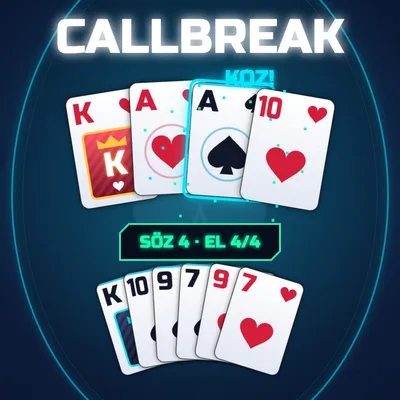
Spades uses a 52-card deck and four players; partners sit opposite each other. Aces are high and twos low. The whole deck is dealt, so each player gets 13 cards, and the deal rotates every hand. In Zipi you and the bot opposite you play against two bot opponents; at an online table you can join a friend on the same team.
Bidding and the team contract
After looking at their cards, players bid once each, starting left of the dealer, saying how many tricks they expect to win, from 0 to 13. There is no second round of bidding.
- The team contract is the sum of both partners' bids: bids of 4 and 3 make a contract of 7.
- Nil (0): you claim you will take no tricks at all. Tricks taken by a Nil bidder do not count towards the partner's contract.
- Blind Nil: bidding Nil before looking at your cards. In Zipi it is only allowed when your team is 100 or more points behind.
The bidding panel suggests a bid based on your hand's value.
Playing the tricks
- The player left of the dealer leads the first trick.
- You must follow suit if you can.
- If you cannot, you may trump with a spade or discard any other card; trumping is never compulsory.
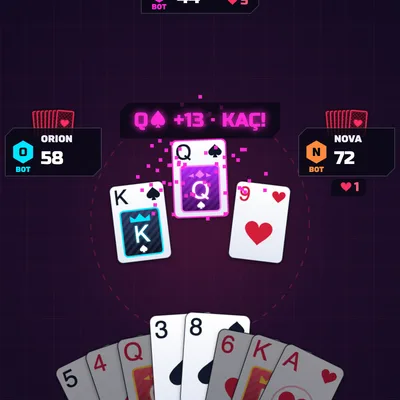
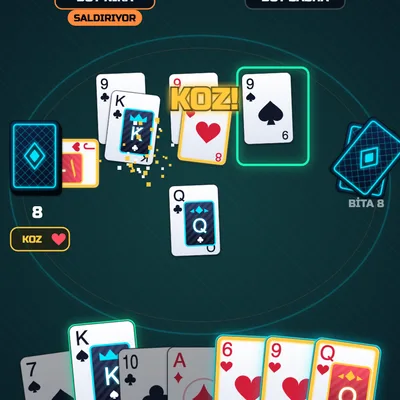
- The highest card of the suit led wins, unless spades were played, in which case the highest spade wins. The winner leads next.
- Spades cannot be led until broken, which happens when someone trumps another suit with a spade, unless you hold only spades.
Zipi variant: some tables have the holder of the 2 of clubs lead the first trick. In Zipi the player left of the dealer leads any non-spade card.
Spades scoring and bags
| Result | Points |
|---|---|
| Contract made | +10 × contract |
| Each trick over the contract (bag) | +1 |
| Contract failed | −10 × contract |
| Nil made (no tricks) | +100 |
| Nil failed (one or more tricks) | −100 |
| Blind Nil made / failed | +200 / −200 |
| Every 10 bags collected | −100 |
Example: your team bids 6 and takes 8: 60 + 2 bags = 62 points. Bidding 6 and taking 5 would score −60.
Nil example: you bid Nil and your partner bids 5. Partner takes 6 and you take none: 50 + 1 bag + 100 = 151. You take one trick and partner makes 5: 50 − 100 + 1 bag = −49. You take none but partner only takes 4: −50 + 100 = +50.
Bags carry over through the match; when the count reaches 10, the team loses 100 points and 10 bags are removed. Tricks taken by a failed Nil bidder are also added to the team's bags. That is why you should bid exactly, not low.
How the game ends
A classic match is played to 500 points and a quick match to 250. If at the end of a hand a team has reached the target or fallen to −200, and the scores are not tied, the higher team wins. On a tie another hand is played.
Common mistakes
- Underbidding to be safe: every extra trick is a bag, and ten bags cost 100 points.
- Forgetting your partner's Nil: be ready to win the tricks they must avoid, and use your high cards to cover them.
- Trying to lead spades too early: it is illegal while you hold other suits and spades are unbroken.
- Winning every trick: once the contract is safe, extra tricks often hurt you.
Spades strategy tips for beginners
- Count your hand: aces and the king of spades are usually a trick each, and long spades add more. A side-suit king alone is risky to count.
- Factor in your partner: if they bid high, bid a little more cautiously.
- Create a void: running out of a side suit lets you trump it later.
- Watch the bag count: at 7 or 8 bags, dump high cards early to avoid extra tricks.
- Set the opponents' Nil: lead low cards in suits where the Nil bidder may be forced to win.
- Save Blind Nil for emergencies: ±200 can swing a game, but it is a decision made without seeing your cards.
Play Spades online on Zipi
Spades plays in your browser on Zipi with no sign-up. In the career every match you win moves you up a level and opponents get sharper: they read hands carefully, count cards, remember who is void in which suit, protect a partner's Nil and try to set yours. At an online table you create a room, share the code and join a friend's team, with bots filling empty seats.
FAQ
What are bags in Spades?
Each trick a team takes beyond its contract is a bag worth 1 point. When a team collects 10 bags it loses 100 points.
How much is a Nil bid worth?
If the Nil bidder takes no tricks the team scores +100; if they take even one, −100. Blind Nil is worth ±200.
When can you bid Blind Nil?
In Zipi only when your team is 100 or more points behind, and you must decide before looking at your cards.
Can you lead spades before they are broken?
No. Spades can only be led after someone has trumped with a spade, or if you hold nothing but spades.
Do I have to trump if I cannot follow suit?
No. You may play a spade or discard any other card.
What score does Spades go to?
In Zipi a classic match goes to 500 and a quick match to 250. The game also ends if a team drops to −200.
How is the team contract calculated?
It is the sum of both partners' bids. A Nil bid counts as zero, and the Nil player's tricks do not help the partner's contract.